1. Start with how you want to feel
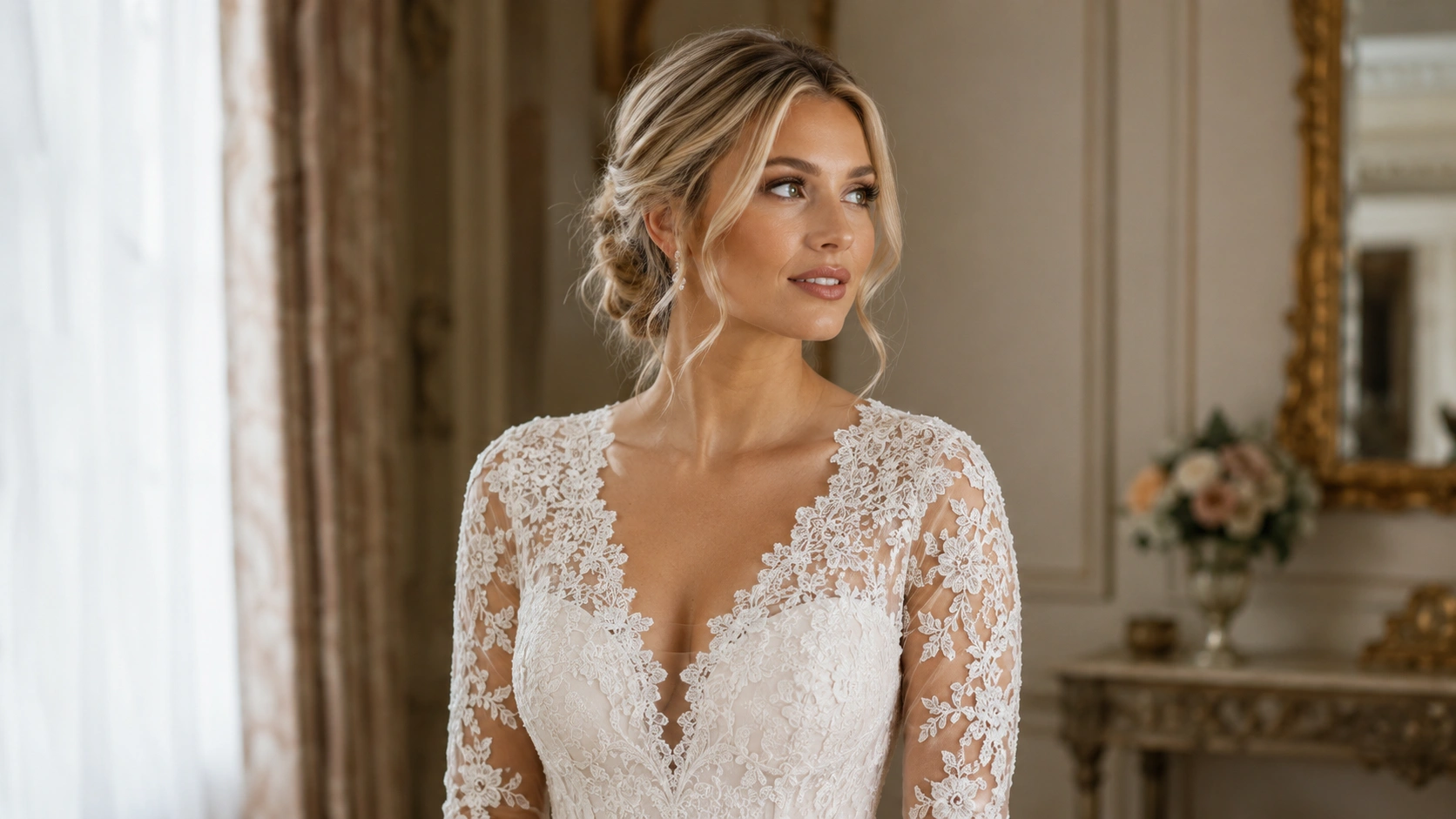
Before comparing labels, decide how you want your gown to make you feel. Some brides want softness and ease, while others want architectural structure, ceremony drama or a visibly sculpted shape. Those emotional goals are often more useful than traditional body-type rules.
Think about your wedding setting, how long you will wear the gown and how freely you want to walk, dance, sit and greet guests. A dress can look beautiful in a still photograph yet feel wrong for your celebration if its structure does not match your day.
2. A-line: versatile and easy to move in
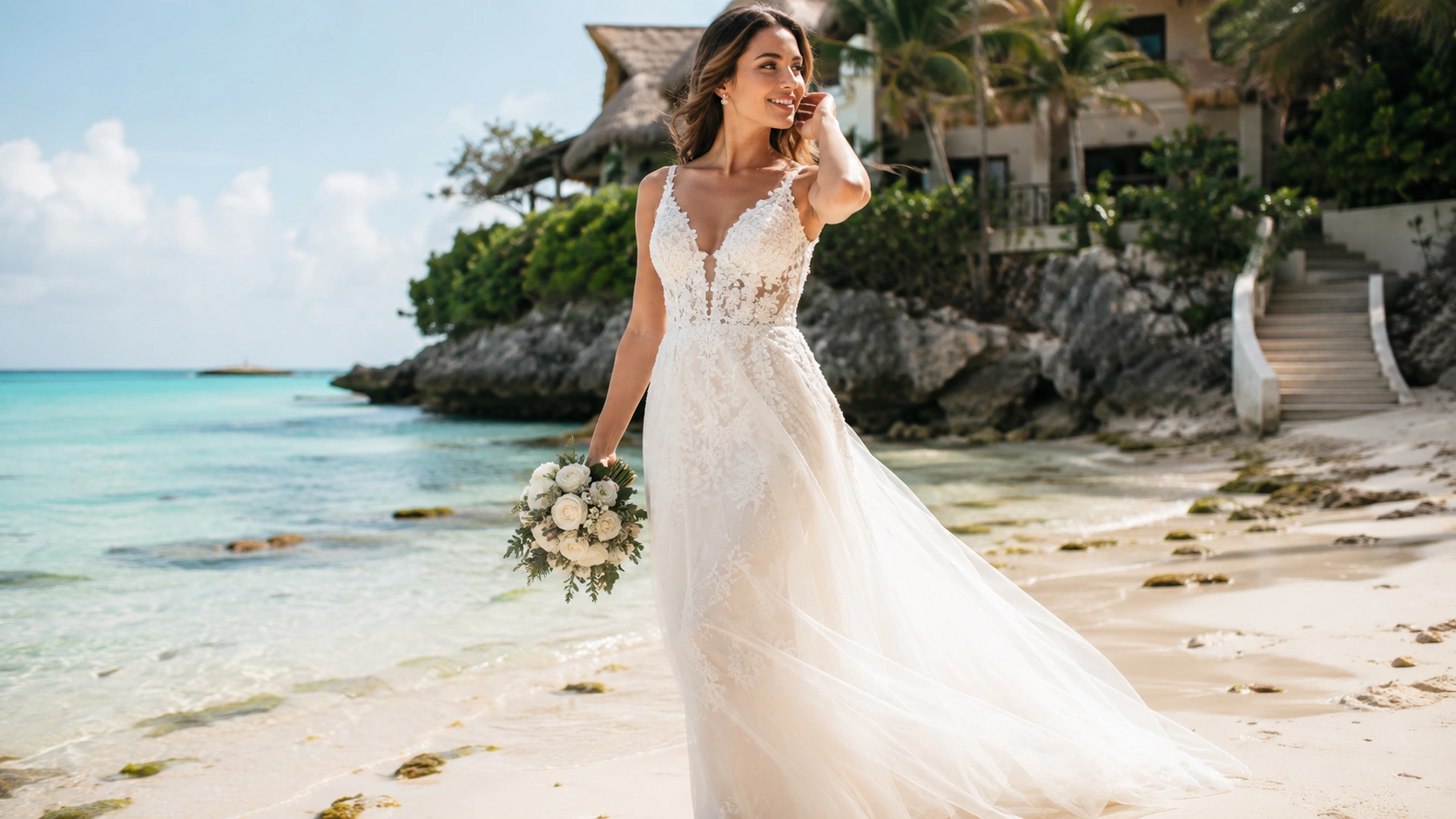
An A-line gown follows the torso and opens gradually from the waist or upper hip. It creates a balanced outline without requiring a very full skirt, which makes it adaptable to formal ballrooms, gardens, beaches and destination weddings.
A-line dresses vary greatly. Soft chiffon versions feel light and relaxed, while mikado or satin versions can look polished and ceremonial. Focus on fabric and construction rather than assuming every A-line gown will behave the same way.
3. Ball gown: structure and ceremony drama
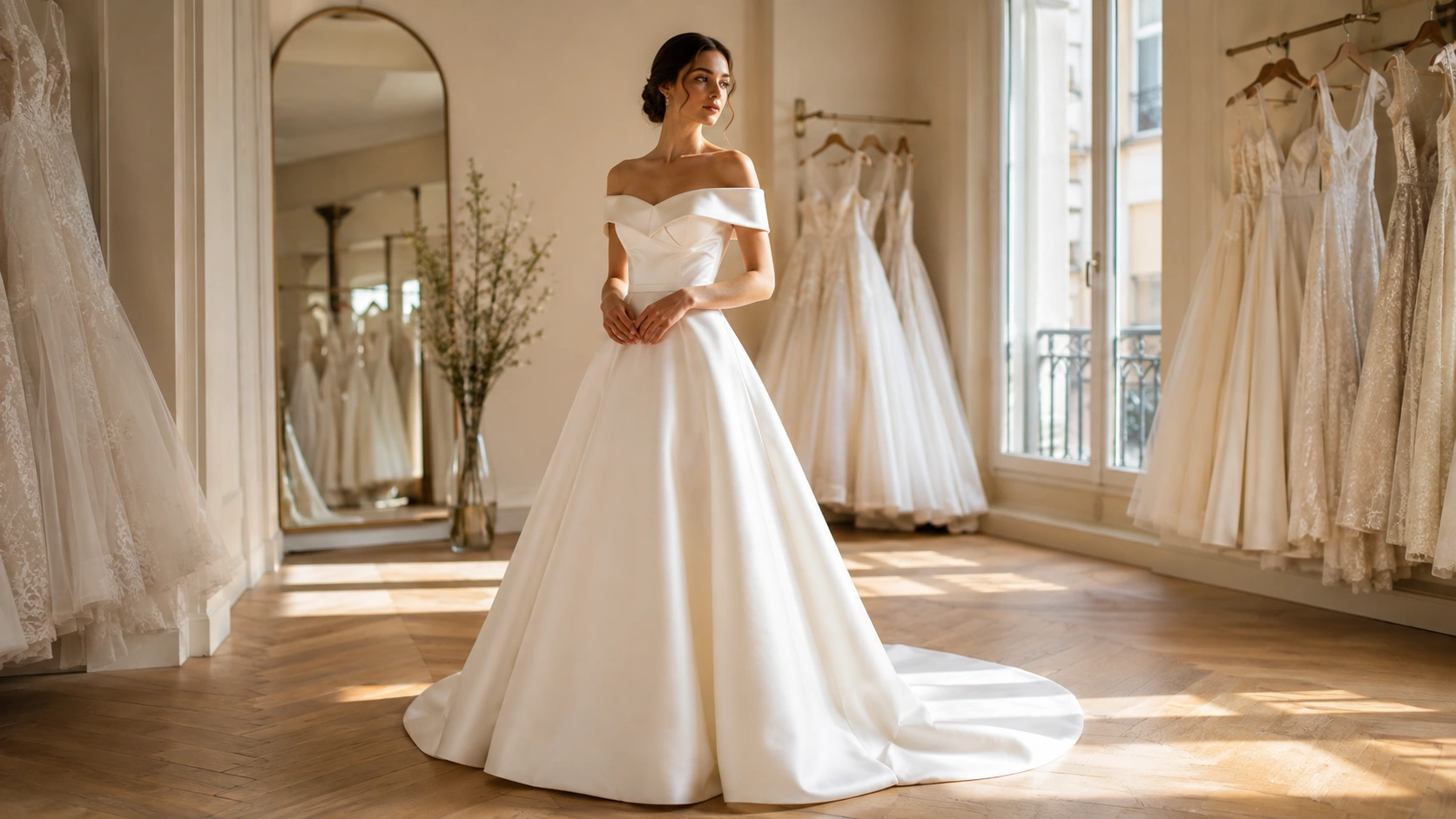
Ball gowns pair a fitted bodice with a full skirt. They create a strong entrance and can feel especially appropriate for grand venues, formal ceremonies and brides who want a traditional sense of occasion.
The practical questions are weight, heat, movement and the size of the venue. Sit, walk and turn in the gown before deciding. A lighter layered skirt may deliver the same visual impact with less effort than heavily structured fabric.
4. Mermaid and fit-and-flare
Mermaid silhouettes remain close through the torso and hips before flaring lower on the body. Fit-and-flare gowns usually begin opening sooner, creating a softer transition and often more freedom of movement.
Both shapes can feel confident and expressive, but placement of the flare matters. Compare several examples rather than judging the entire category from one gown. Small construction differences can change comfort and proportion dramatically.
5. Sheath and column: clean and effortless
Sheath and column dresses fall more directly from the body and usually carry less volume. They can feel modern, understated and easy to pack, making them popular for intimate ceremonies and destination celebrations.
Because the fabric hangs closer to the body, drape and understructure become important. Crepe, silk and satin each reveal and skim differently, so an in-person fitting remains essential.
6. Let your venue and movement guide you
Beach sand, garden lawns, stairs, narrow aisles and energetic receptions all affect how a skirt performs. Consider bustle options, train length and whether you will change shoes or move between ceremony and reception spaces.
Your best silhouette is the one that supports the full wedding experience, not only the first photograph.
7. Use Virtual Try-On as a discovery tool
Virtual Try-On can help you compare broad shapes before visiting a salon. It is useful for identifying silhouettes you may have overlooked and for communicating visual preferences to a stylist.
Treat generated images as direction, not a guarantee of exact fit. Fabric weight, boning, tailoring and movement can only be understood with the real gown.