1. Choose the gown before finalizing the hairstyle
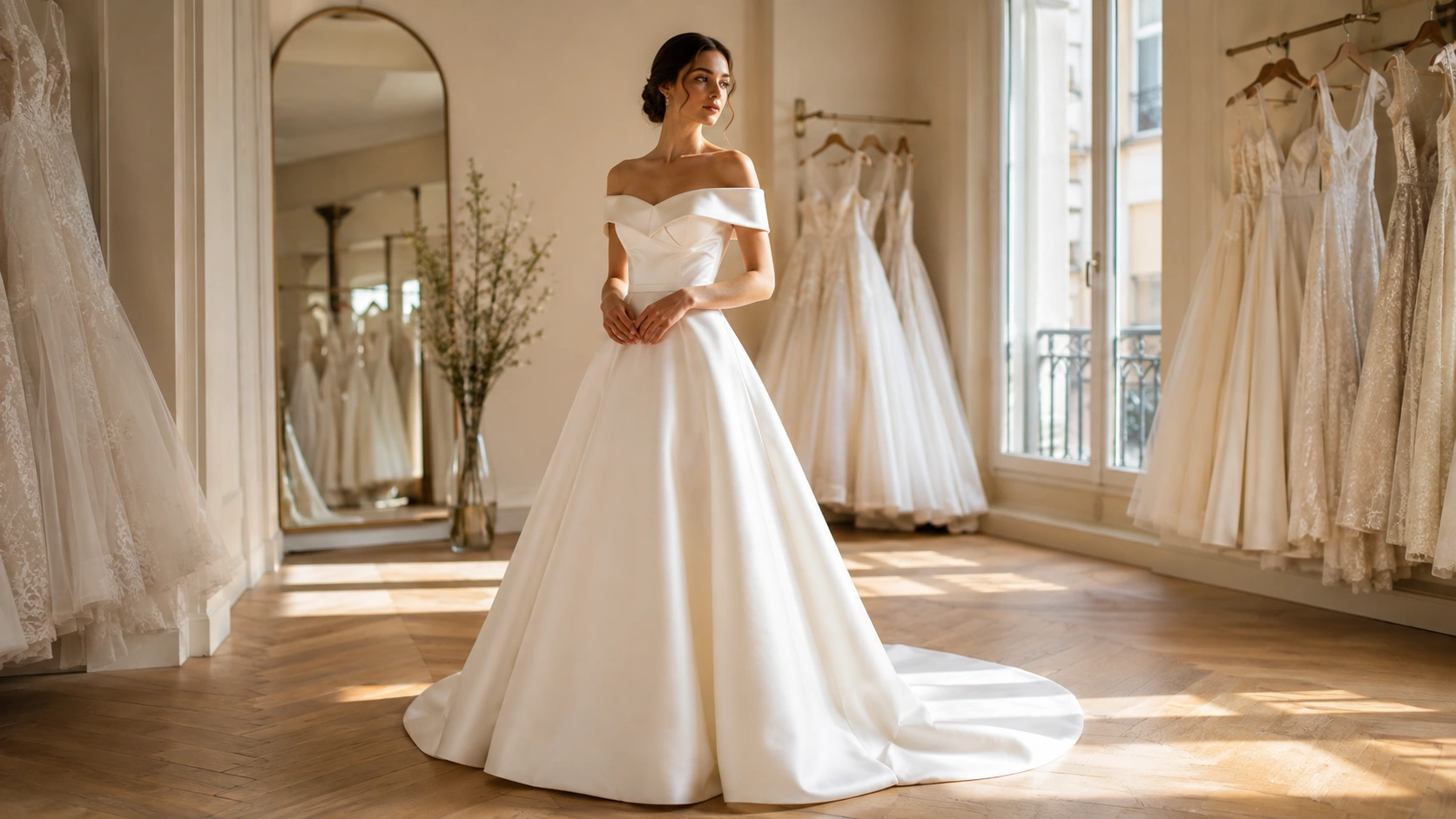
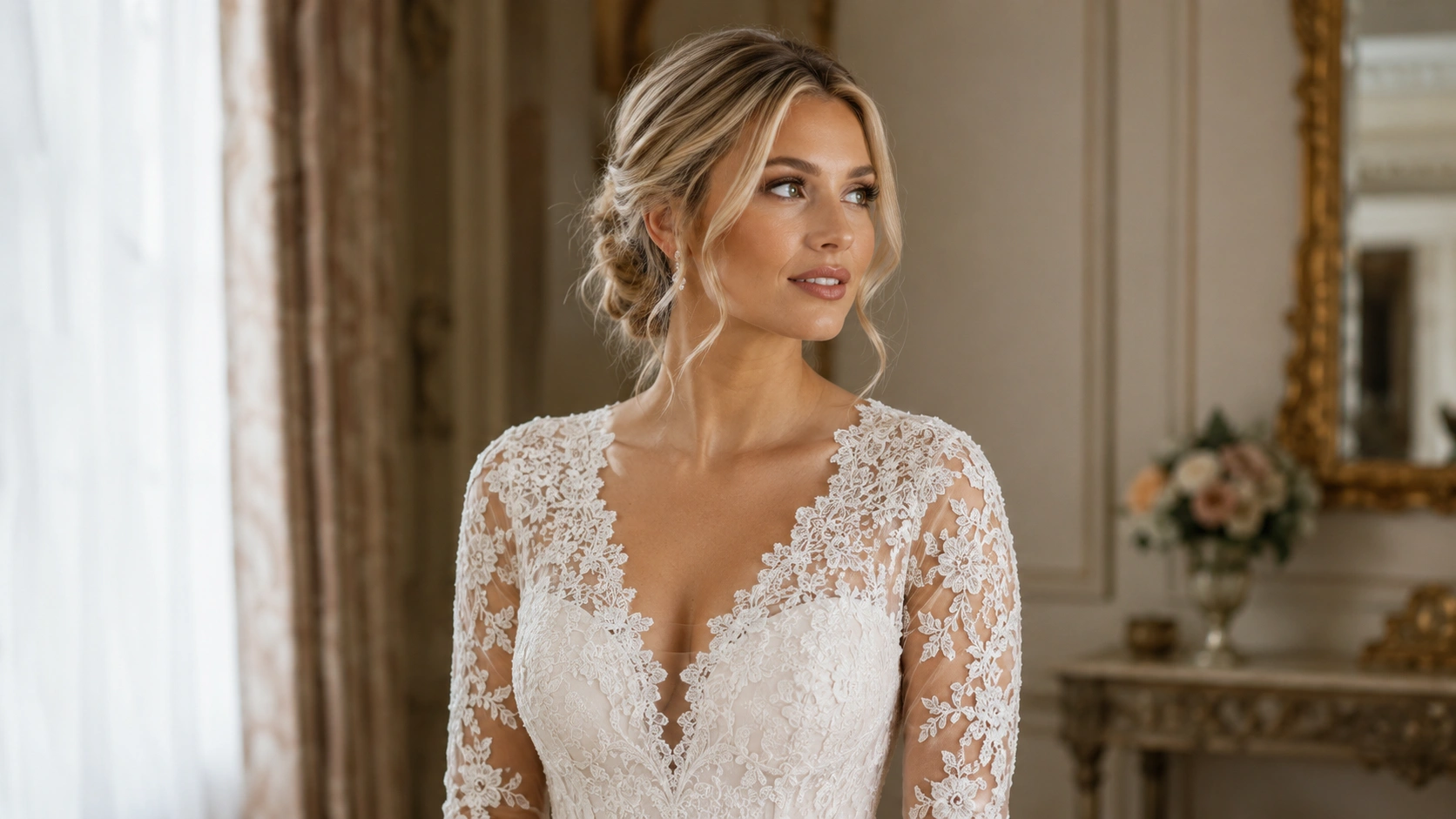
Your neckline, back detail and overall dress mood provide useful direction. A hairstyle selected too early may hide the feature you ultimately love most about the gown.
Begin collecting ideas early, but make the final decision after the dress and veil are known.
2. Show detailed necklines and backs
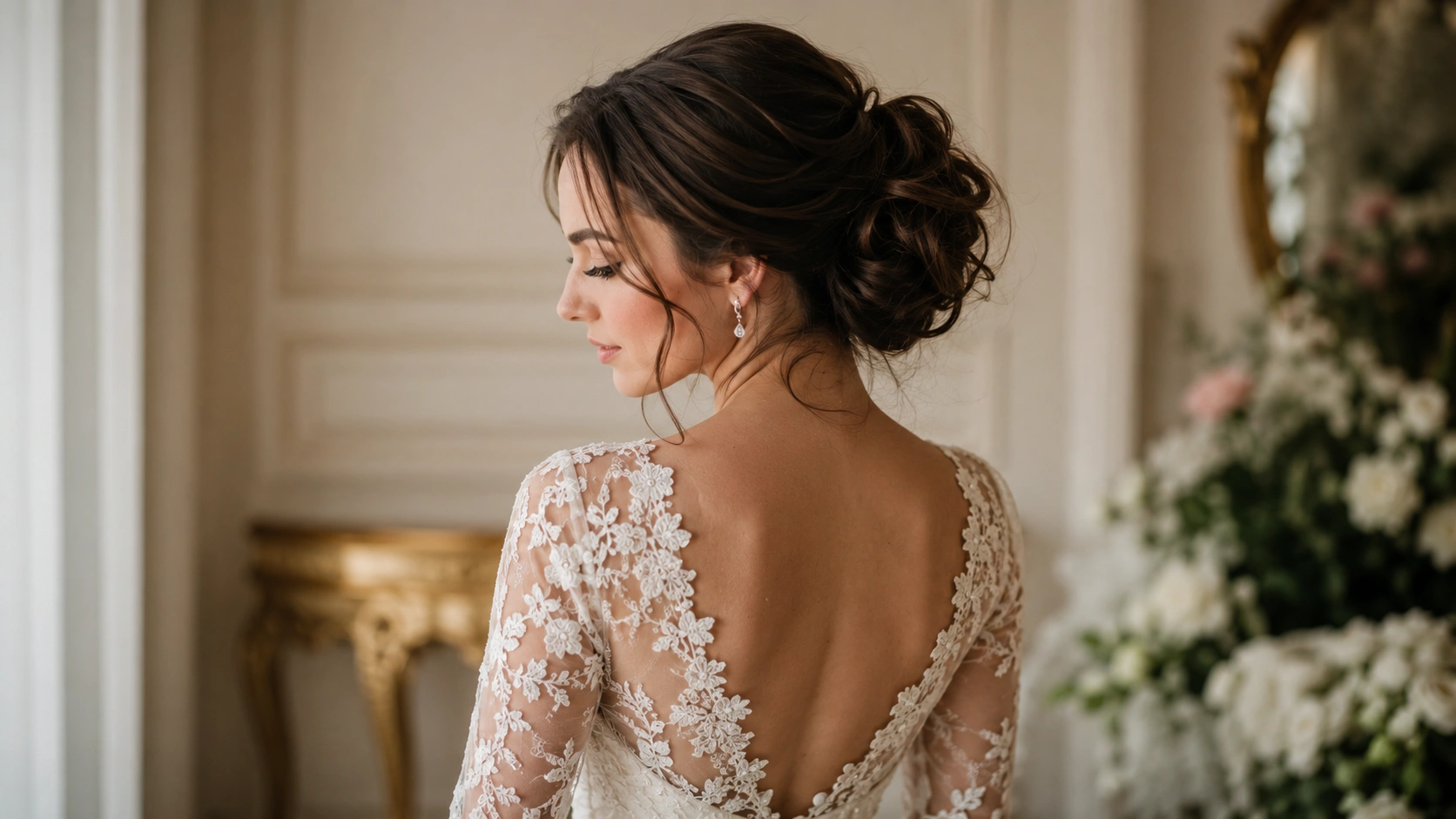
Intricate backs, high collars and statement shoulders often benefit from hair being lifted or swept aside. A low bun, braided updo or side-swept style can preserve visibility without feeling severe.
For simpler gowns, loose waves or fuller natural styles can become a central design feature.
3. Work with natural texture
Locs, braids, twists, curls, coils and straightened styles can all create polished bridal looks. The goal is not to force your hair into a generic bridal standard but to refine a style that feels recognizably yours.
Choose a stylist experienced with your texture and schedule a trial using the accessories you plan to wear.
4. Balance the veil and accessories
Veil placement changes the shape of a hairstyle. Combs, pins, crowns, flowers and headbands also require secure anchoring and enough visual space.
Bring every accessory to the trial and photograph the style from the front, side and back.
5. Plan for weather and celebration length
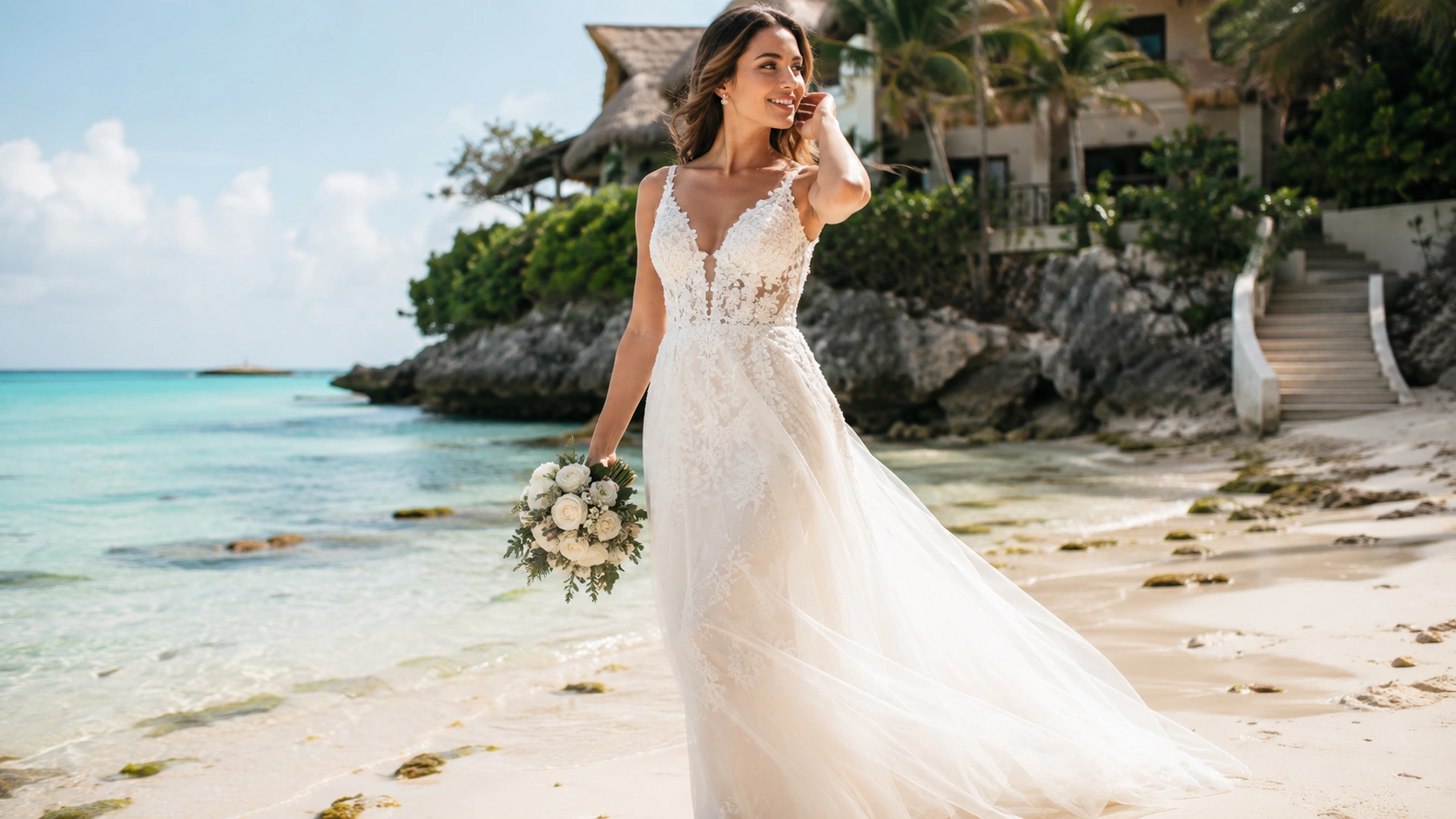
Humidity, wind and heat can affect hold and comfort. Destination weddings may require stronger preparation, anti-humidity products and a style that remains secure through travel and outdoor photography.
Ask your stylist for a small touch-up kit and designate someone who can assist.
6. Use mockups thoughtfully
Hairstyle visualization can help you compare updos, braids, loc styles and loose looks alongside your dress preferences. It is particularly useful when you are unsure which direction to trial first.
A mockup is inspiration, not a precise promise of texture, length or final execution. Share it with your stylist as a conversation starter.