1. Why bridal terminology matters
Two dresses can share the same silhouette yet feel completely different because of the neckline and sleeve treatment. These details frame the face, shoulders and upper body, influence jewellery choices and determine how much support is built into the bodice.
Use terminology as a communication tool, not a rigid checklist. Save examples and note what you like about each one.
2. Sweetheart, scoop and curved necklines
Sweetheart necklines create a soft heart-shaped curve and are common in strapless and supported bodices. Scoop necklines have a gentler rounded shape and can range from modest to low-cut.
Curved necklines often feel romantic and can soften heavily structured gowns. The depth of the curve matters as much as the label, so compare photographs from the front and side.
3. Square, bateau and high necklines
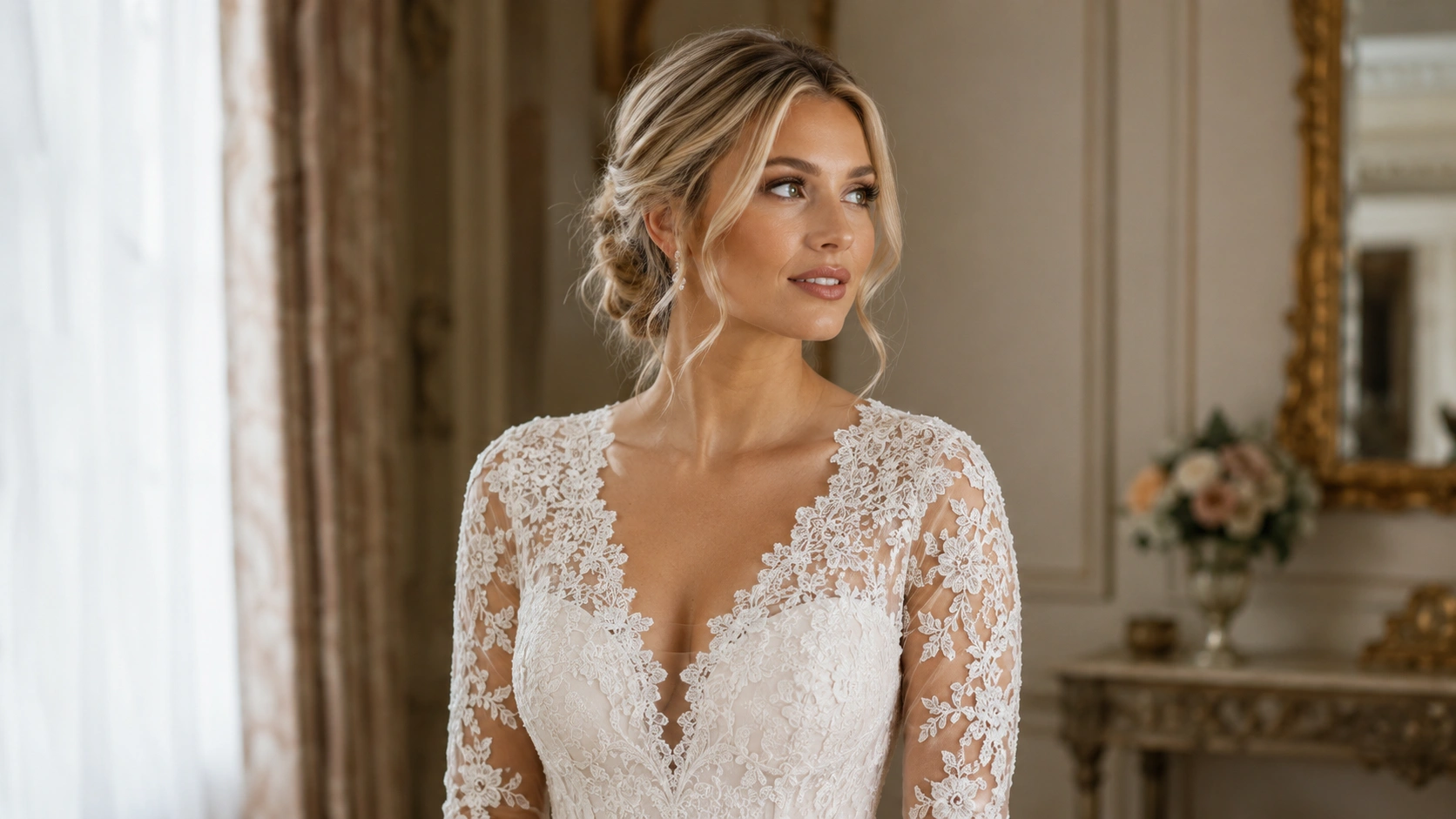
Square necklines create clean visual lines and can feel modern, regal or vintage depending on the fabric. Bateau necklines run wider across the collarbone, while high necklines provide more coverage and often showcase lace or illusion detailing.
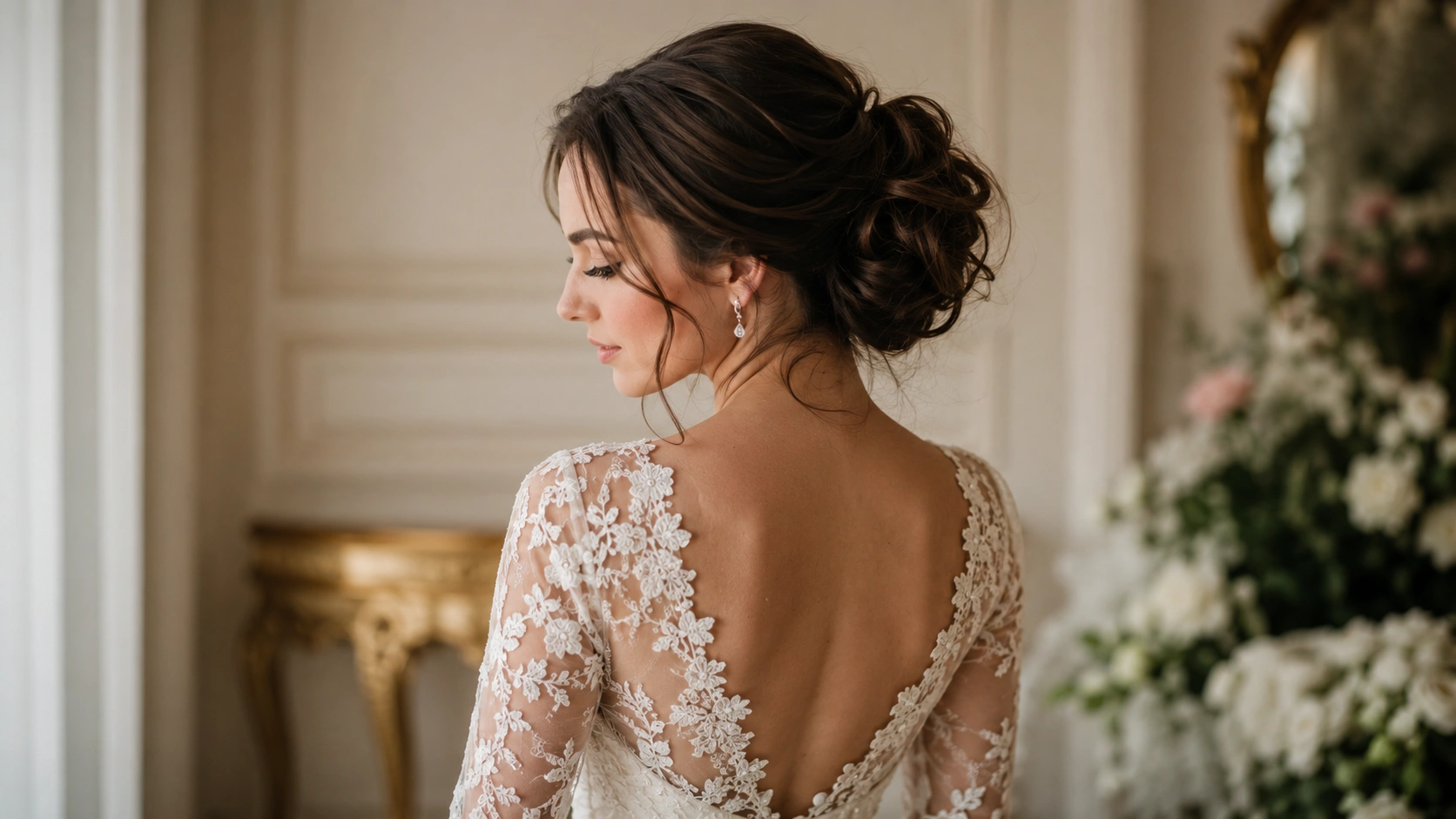
These styles can draw attention to the shoulders and neckline area, making them especially effective when the gown has an open or detailed back.
4. V-neck and plunging styles
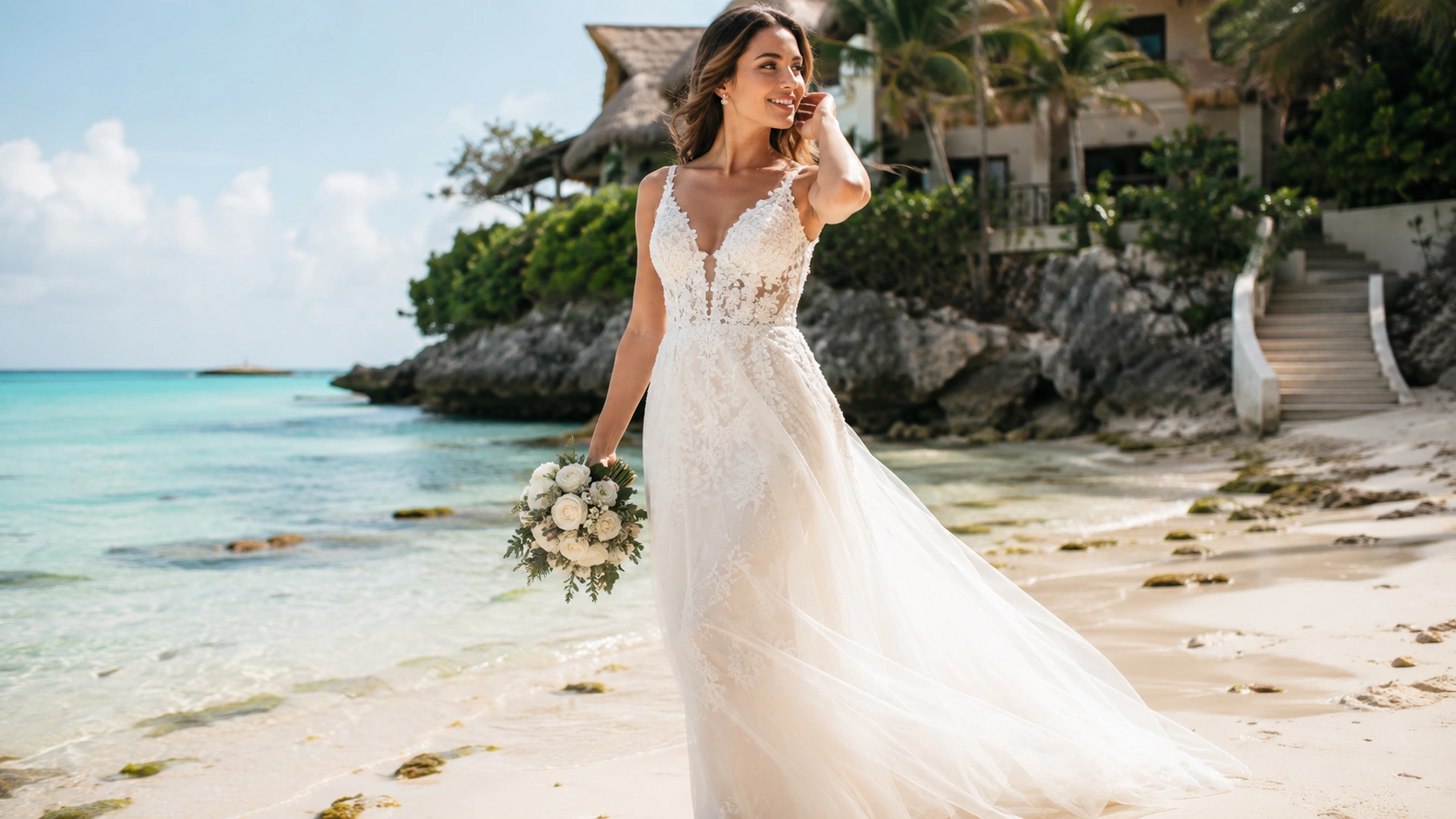
V-necklines visually lengthen the upper body and can range from subtle to dramatic. Plunging designs may use illusion mesh for stability and coverage while preserving the deep shape.
Ask how the neckline behaves when you sit, bend and move. A well-designed plunge should feel secure rather than requiring constant adjustment.
5. Strapless, off-the-shoulder and straps
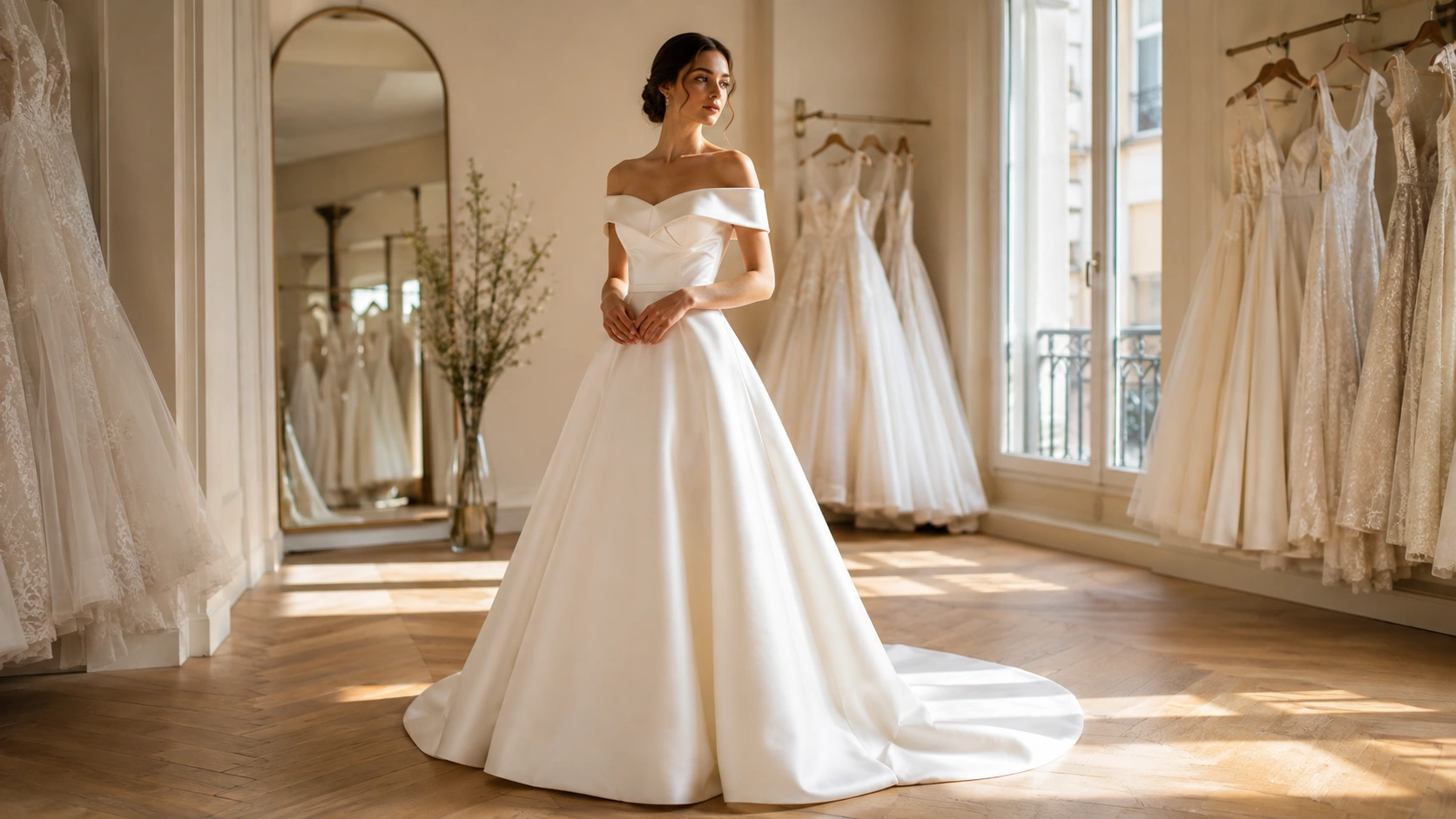
Strapless gowns rely on internal structure rather than the neckline alone. Off-the-shoulder styles frame the collarbone but may limit arm movement depending on construction. Narrow straps, wider straps and halter shapes can add support while changing the visual balance of the bodice.
Try raising your arms and embracing someone during fittings. The right choice should support real wedding movement.
6. Sleeves and detachable options
Cap sleeves, short sleeves, long lace sleeves, bishop sleeves and fitted illusion sleeves each create a different mood. Detachable sleeves can provide ceremony coverage and a lighter reception look without requiring a second gown.
Consider climate and fabric breathability. A sheer sleeve may still feel warm in a humid destination setting.
7. Coverage with intention
Coverage can be created through lining, illusion panels, higher backs, wider straps and strategic lace placement. It should support your comfort and confidence, not conceal you according to someone else's expectations.
Record both what you want to highlight and where you prefer more coverage in your Bridal Showcase so salons can recommend thoughtfully.